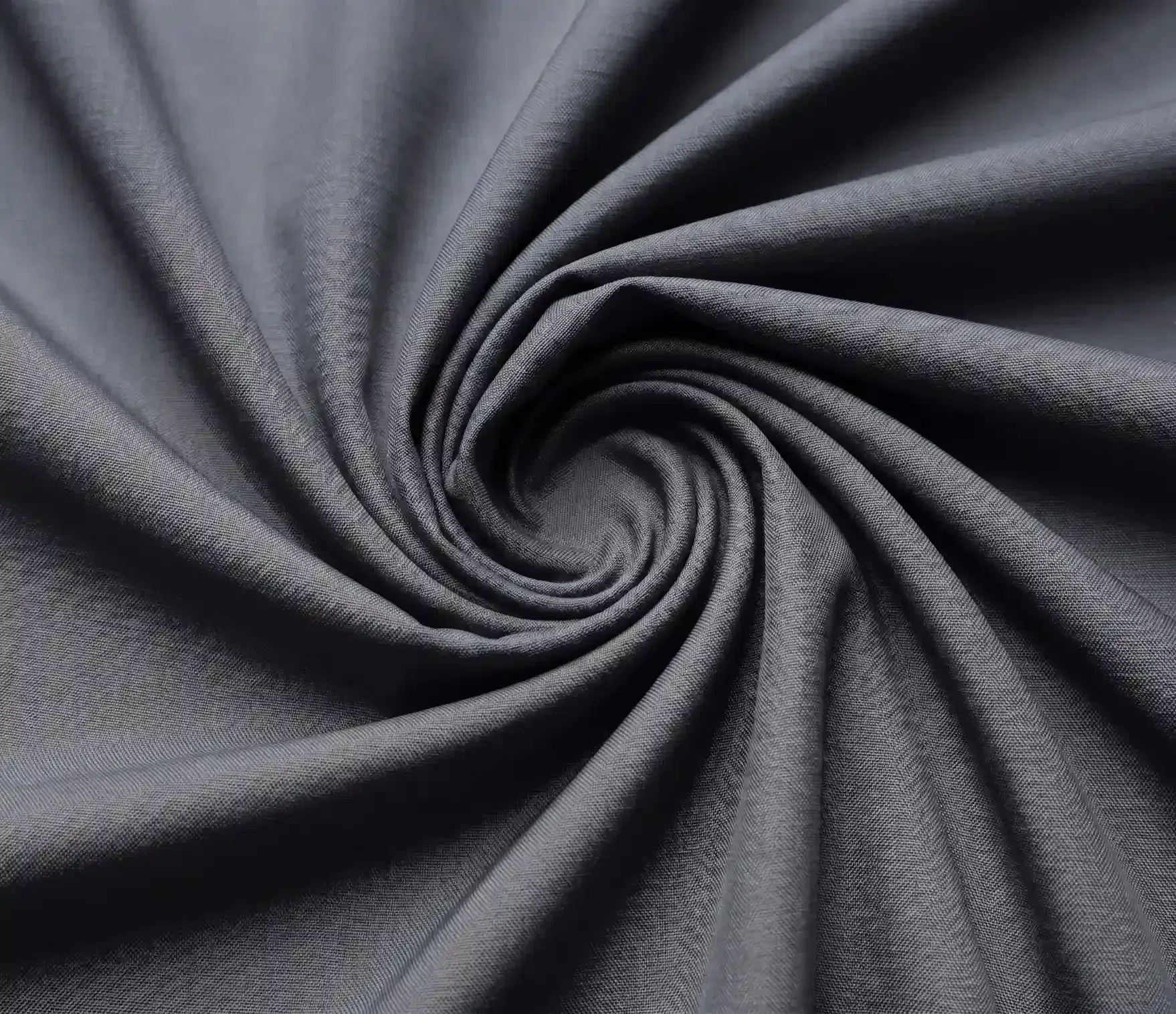
Nylon
Nylon is the strongest commonly used synthetic fiber, prized for its silky feel, elasticity, and abrasion resistance. Measured in both GSM and denier, it is the commercial standard for outerwear, activewear, hosiery, and bags.
Nylon (polyamide) was the first fully synthetic fiber ever commercialized and remains the benchmark for strength-to-weight ratio in textiles. Its smooth, silky surface, natural elasticity, and outstanding abrasion resistance make it the commercial standard for performance outerwear, premium activewear, hosiery, and heavy-duty bags. Nylon fabrics are specified in both GSM and denier (D), where denier indicates yarn thickness.
Available Weight Options
- 70D / 80 - 110 GSM: Ultra-light taffeta and ripstop for windbreakers and packable jackets
- 150 - 200 GSM: Nylon-spandex knits for leggings, swimwear, and activewear
- 210D / 180 - 230 GSM: Midweight oxford for linings, light bags, and sportswear shells
- 420D - 500D: Heavy-duty weaves for backpacks and luggage
- 1000D Cordura-type: Maximum durability for tactical and industrial gear
Popular Nylon Variants
- Ripstop Nylon: Grid-reinforced weave that stops tears from spreading
- Nylon Taslan: Textured, matte finish popular for tracksuits and outerwear
- Nylon Taffeta: Smooth, lightweight weave for linings and shells
- Nylon-Spandex (80/20): Four-way stretch standard for leggings and swimwear
- Coated Nylon (PU/DWR): Water-repellent finishes for rainwear
Key Features
- Exceptional tensile strength and tear resistance
- Naturally elastic with excellent shape recovery
- Smooth, silky hand feel that glides over the skin
- Resistant to abrasion, mildew, and many chemicals
- Quick-drying and lightweight
Commercial Applications
- Windbreakers, rain jackets, and technical outerwear
- Leggings, swimwear, and compression activewear
- Hosiery, tights, and seamless garments
- Backpacks, luggage, and accessories
Printing and Customization
Nylon accepts acid dyes for deep, rich colors and works well with heat transfer, screen printing with nylon-specific inks, and embroidery. Low-heat methods are recommended due to its lower melting point.
Care Instructions
Machine wash cold, hang or tumble dry on low, and never iron on high heat. Avoid chlorine bleach. Properly cared for, nylon garments retain elasticity and color for years of heavy use.
Frequently Asked Questions
Common questions about Nylon.